
[σημασία έχει και τι προσφέρουμε εμείς ·
04/04/2020 § Σχολιάστε
Συγχαρητήρια στους συνανθρώπους μας
❇︎
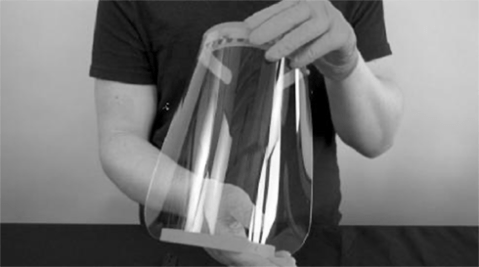
1. Η Ε. Αγκόλι, Αλβανίδα με δύο παιδιά, διαθέτει κατάστημα ρούχων και παρέδωσε 600 μάσκες μετά από εννιά μέρες. Όταν την πήραν τηλέφωνο από το νοσοκομείο Γρεβενών και τη ρώτησαν εάν μπορεί να τους ετοιμάσει 600 χειρουργικές μάσκες, η Ελόνα απάντησε αμέσως καταφατικά.Η υπεύθυνη υπάλληλος του νοσοκομείου ζήτησε να της δώσει τιμή ανά τεμάχιο. Η Ελόνα πάλι δεν το σκέφτηκε ούτε μια στιγμή. «Άκουγα συνεχώς στις ειδήσεις ότι υπάρχει έλλειψη μασκών στα νοσοκομεία ότι οι γιατροί και νοσηλευτές κάνουν συνεχώς εκκλήσεις γιατί τους τελειώνουν. Είπα αμέσως στην κυρία ότι δεν θέλω χρήματα ότι θα τις κατασκευάσω δωρεάν και θα τις προσφέρω στο νοσοκομείο και σε όσους εργαζόμενους τις έχουν ανάγκη. Τότε μου είπαν ότι θα μου στείλουν το ύφασμα, τους ζήτησα κι ένα δείγμα το οποίο χρησιμοποίησα για να κάνω πατρόν».
2. Έλληνες ερευνητές φτιάχνουν μάσκες και εξαρτήματα για αναπνευστήρες με 3D εκτυπωτές. «Πολεμοφόδια» για τους γιατρούς και τους νοσηλευτές που δίνουν τη μάχη με τον κορωνοϊό ετοιμάζει μια ομάδα εθελοντών από τη Θεσσαλία. Η ομάδα του TED3D, όπως αναφέρει, «επισκέφτηκε κεντρικά νοσοκομεία της περιφέρειας Θεσσαλίας, αφουγκράστηκε τις βασικές και ρεαλιστικές ανάγκες που υπάρχουν αυτή τη στιγμή και προχωρά στην παραγωγή προστατευτικών μασκών, ανέπαφων χειρολαβών θυρών και τμημάτων συστημάτων αναπνευστικής υποστήριξης ασθενών. Η ομάδα μας σε συνεργασία με τους υπόλοιπους φορείς είναι πρόθυμη να βοηθήσει για όσο διάστημα απαιτηθεί και δεσμεύεται για το καλύτερο δυνατό αποτέλεσμα».
Σύντομα οι πρώτες ποσότητες των παραπάνω ειδών θα παραδοθούν στα νοσοκομεία του Βόλου και της Λάρισας. Να σημειωθεί ότι οι υπηρεσίες προσφέρονται από τους συνεργαζόμενους εθελοντικά, ενώ τα έξοδα σχεδιασμού, αγοράς πρώτων υλών και παραγωγής τελικών ειδών θα καλυφθούν από ιδίους.
3. Το ΕΠΑΛ Καστοριάς σε συνεργασία με τον Πόλο Εκπαιδευτικής Καινοτομίας, Τεχνολογίας, Πληροφορίας και Επικοινωνιών (ΠΕΚΤΠΕ) Καστοριάς της Περιφερειακής Διεύθυνσης Εκπαίδευσης Δυτικής Μακεδονίας ξεκινούν να παράγουν προστατευτικές μάσκες με τη χρήση 3D εκτυπωτή. Οι άξιοι συνάδελφοι αφού διερεύνησαν τις δυνατότητες δημιουργίας, προχώρησαν στην προμήθεια των πρώτων υλών και ξεκινούν την 3D κατασκευή. Το μοντέλο προστατευτικής μάσκας που επέλεξαν είναι της Prusa Printers που είναι εγκεκριμένο από το Υπουργείο Υγείας της Τσεχίας. Το ίδιο μοντέλο χρησιμοποιεί η εταιρία 3dHub η οποία προωθεί το τελικό προϊόν της (αφιλοκερδώς) στο Υπουργείο Υγείας της χώρας μας. Οι προστατευτικές μάσκες που θα παραχθούν θα παραχωρηθούν δωρεάν στο Υγειονομικό προσωπικό, το προσωπικό της Ελληνικής Αστυνομίας και της Πυροσβεστικής της Περιφέρειάς μας.
Ας μείνουμε μακριά από μιζέριες. Μακριά από στείρα χυδαία Αυριανική αντιπολίτευση. Χρειαζόμαστε γόνιμες προτάσεις, σοβαρή, γόνιμη αντιπολιτευτική πολιτική κριτική.
Εμπρός.
❇︎
[Ανώνυμος ο Έλλην: Ελληνική Νομαρχία ·
25/03/2020 § Σχολιάστε
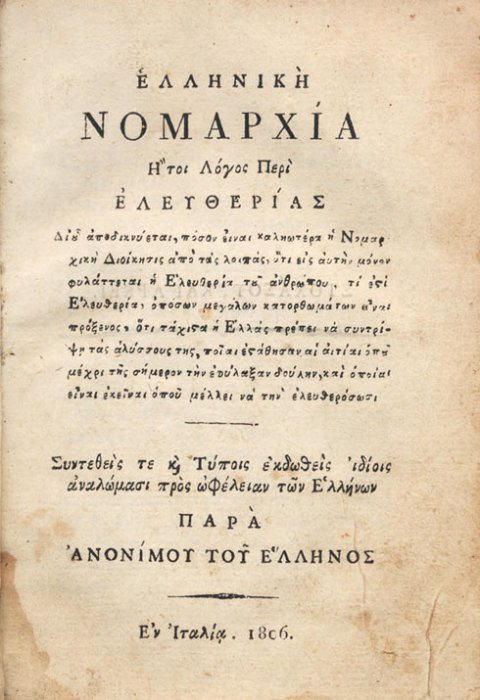
Ελληνική Νομαρχία: ήτοι Λόγος περί Ελευθερίας
επιλεγμένα αποσπάσματα
✾
Δύο αἴτια εἶναι, ὦ Ἕλληνές μου ἀκριβοί, ὁποὺ μέχρι τῆς σήμερον μᾶς φυλάττουσι δεδεμένους εἰς τὰς ἁλύσους τῆς τυραννίας, εἶναι δὲ τὸ ἀμαθὲς ἱερατεῖον καὶ ἡ ἀπουσία τῶν ἀρίστων συμπολιτῶν. Εἰς τὴν διήγησιν τῆς δευτέρας αἰτίας, εἰς τὴν ὁποίαν συγκαταλέγεται καὶ ἡ κλάσις τῶν εὐεργέτων τῆς Ἑλλάδος, θέλω φανερώσει τὸ χρέος των, ὡς ἔταξα. Τὰ δὲ προλεχθέντα περὶ τῆς ἀρετῆς αὐτῶν χρησιμεύουν ὡς προλογίδιον εἰς τὴν ἐξέτασιν, ἐν ᾗ εἰσέρχομαι τώρα, διὰ νὰ ἀποδείξω, ὅτι δὲν εἶναι οὔτε δειλία, οὔτε ἀστοχασία τῶν Ἑλλήνων, ὁποὺ μέχρι τῆς σήμερον μᾶς φυλάττει ὑπὸ τῆς ὀθωμανικῆς τυραννίας, καὶ νὰ ἀποστομώσω τὰς φθονερὰς καὶ καταλάλους γλώσσας τῶν ἀλλοφύλων.
Ὦ σὺ μιαρὰ Σύνοδος τῆς Κωνσταντινουπόλεως, εἰς τί ὁμοιάζεις, ἤθελα νὰ ἠξεύρω ἀπὸ ἐσὲ τώρα ὁποὺ σὲ ἐρωτῶ, εἰς τί, λέγω, ὁμοιάζεις τοὺς ἱεροὺς καὶ θείους ἀποστόλους τοῦ λόγου τῆς σοφίας τοῦ Ἰησοῦ Χριστοῦ; Ἴσως εἰς τὴν ἔνδειαν καὶ ἀφιλοκέρδειαν, ὁποὺ ἐκεῖνοι ἐκήρυττον; Ἀλλ᾿ ἐσὺ εἶσαι γεμάτη ἀπὸ χρήματα, ὁποὺ καθημερινῶς κλέπτεις ἀπὸ τοὺς ταλαιπώρους χριστιανούς. Ἴσως εἰς τὴν ἐγκράτειαν καὶ χαλιναγωγίαν τῶν παθῶν; Ἀλλ᾿ εἰς ποῖον μεγάλον ξεφάντωμα δὲν εὑρίσκεται μέρος ἀπὸ τοὺς συγκλήτους σου, καὶ ποῖος ἀπὸ αὐτοὺς δὲν λατρεύει δύο καὶ τρεῖς ἀρχοντίσσας μὲ ἄκραν ἀναισχυντίαν καὶ σχεδὸν φανερά ;
Σύ, λοιπόν, ὦ Σύνοδος, ἀγκαλὰ καὶ νὰ φέρῃς τοὺς τίτλους τῆς ἁγιωσύνης καὶ τὰ σημεῖα τῆς ἀρετῆς, οὐχί, οὐχί, ποσῶς δὲν ὁμοιάζεις τὰ ὑποκείμενα, ὁποὺ προσπαθεῖς νὰ παρησιάσῃς. Σὺ εἶσαι μία μάνδρα λύκων, ὁποὺ δὲν ὑπακούεις τὸν ποιμένα σου καὶ κατατρώγεις τὰ ἀθῶα καὶ πολλὰ ἥμερα πρόβατα τῆς ὀρθοδόξου ἐκκλησίας. Ὡς τοιαύτην λοιπὸν θέλω σὲ νομίσει εἰς τὸν παρόντα μου λόγον, καὶ ἂν ἡ ἀμάθεια τῶν Ἑλλήνων καὶ ἡ ἀπειρία αὐτῶν ἐφύλαξεν μέχρι τῆς σήμερον εἰς μακαριότητα τὸ ἀνυπόφορον κράτος σου, τὸ φῶς τῆς μαθήσεως καὶ ὁ ἥλιος τῆς ἀληθείας θέλουσι σᾶς ἀποδείξει εἰς τοὺς ὀφθαλμοὺς ὅλων, ὄχι καθὼς προσποιεῖσθε νὰ εἶσθε, ἀλλὰ καθὼς εἶσθε τωόντι.
✾
[οι «Παλιές Καλές Εποχές» ·
23/03/2020 § Σχολιάστε
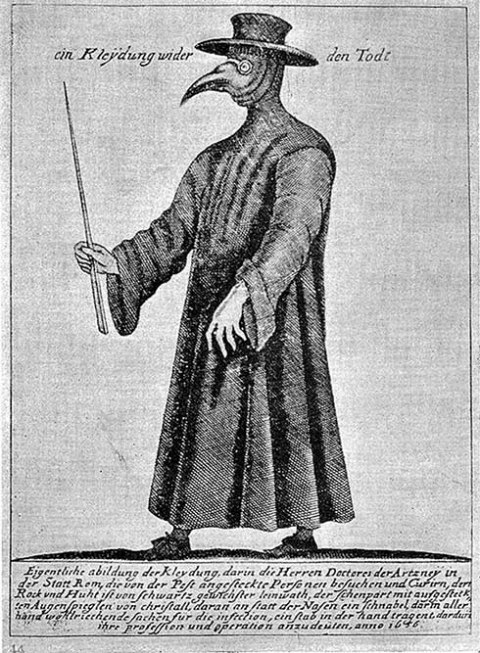
Plague doctors sometimes wore a special uniform. Wellcome Collection, CC BY
※
Ημερολόγιό μου, στις προηγούμενες συμφορές/πανούκλες/επιδημίες της ανθρωπότητας δεν υπήρχε το διαδίκτυο, δεν πληροφορούνταν κανείς. Έξω σκότος, μέσα σκοτάδι χωρίς ηλεκτρικό και παντού να παραμονεύει το θανατικό κι οι άνθρωποι βουβοί, περίμεναν κάτι που ίσως ερχόταν ίσως όχι. Χωρις Ίντερνετ, τάμπλετ, άι-παντ ή λαπτοπ, εκεί στα σκοτεινά. Πάντα το σήμερα θα είναι καλύτερο από το χτες, και πάντα το μέλλον πιστεύω να είναι καλύτερο από το σήμερα. Όλα αυτά τις «Παλιές Καλές Εποχές», ημερολόγιό μου…
※
σήμερα στο fcbk (έπρεπε να το γράψω πρώτα εκεί).
[Το σχολείο προσφύγων «One Happy Family» στη Λέσβο, κάηκε από Παλαιστίνιους ·
21/03/2020 § Σχολιάστε
«Εισαγόμενοι» εμπρηστές από την Αθήνα έκαψαν το σχολείο προσφύγων
Mία μεγάλη ανατροπή επιφύλασσε η έρευνα της Αστυνομίας για το οργανωμένο σχέδιο εμπρησμού με στόχο την προσφυγική δομή «One Happy Family» και το «Σχολείο της Ειρήνης» για προσφυγόπουλα, απέναντι από τον καταυλισμό του Καρά Τεπέ στη Λέσβο.
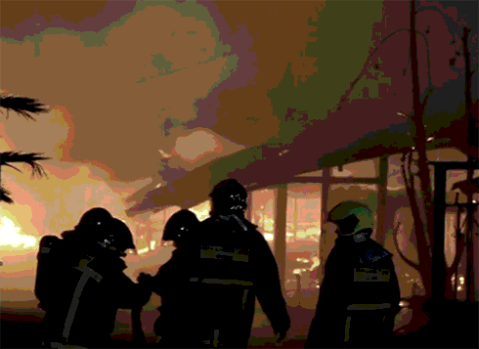
Ο περίεργος εμπρησμός είχε γίνει στις 20.30 βράδυ Σαββάτου, στις 7 Μαρτίου 2020. Όπως λένε στο ethnos.gr αξιόπιστες πηγές, η φωτιά μπήκε από «επαγγελματίες» και έκαψε μία πολύ μεγάλη έκταση, καταστρέφοντας ολοσχερώς το κτίριο του σχολείου και προκαλώντας εκτεταμένες καταστροφές στην υπόλοιπη προσφυγική δομή.
Οι υποψίες αρχικά είχαν πέσει σε ομάδες ακροδεξιών της Λέσβου που είχαν στοχοποιήσει ανθρωπιστικές οργανώσεις και ΜΚΟ. Όπως αποδείχτηκε, ωστόσο, από τη συστηματική έρευνα των ανδρών της Υποδιεύθυνσης Ασφάλειας Μυτιλήνης, τα πράγματα ήταν πολύ διαφορετικά.
Ύστερα από πολυήμερη έρευνα ο εμπρησμός εξιχνιάστηκε. Οι αστυνομικοί σχημάτισαν δικογραφία για έναν Παλαιστίνιο, ο οποίος ζει μόνιμα στη Λέσβο και εργάζεται ως διερμηνέας, όπως και για ακόμα δύο Παλαιστίνιους, οι οποίοι ζουν στην Αθήνα και μετέβησαν στο νησί αποκλειστικά για να κάψουν την προσφυγική δομή που λειτουργεί από ισραηλινή ανθρωπιστική οργάνωση.
Αυτό που προκαλεί αίσθηση είναι ότι οι δύο Παλαιστίνιοι από την Αθήνα ταξίδεψαν για τη Λέσβο την ημέρα του εμπρησμού και γύρισαν πίσω την επομένη. Σύμφωνα με πληροφορίες, όταν έφτασαν στη Λέσβο τους παρέλαβε ο ομοεθνής τους με αυτοκίνητο, τους μετέφερε στις εγκαταστάσεις της προσφυγικής δομής, έβαλαν τη φωτιά και στη συνέχεια διέφυγαν με το ίδιο όχημα. Η Αστυνομία εξετάζει τη σχέση τους με Μη Κυβερνητική Οργάνωση, με έδρα το κέντρο της Αθήνας.
Οι αστυνομικοί της Ασφάλειας Μυτιλήνης έφτασαν στα ίχνη τους μέσα από πολυήμερη ανάλυση βιντεοληπτικού υλικού και μέσα από την αξιοποίηση άλλων στοιχείων. Σε βάρος των τριών αντρών σχηματίστηκε δικογραφία που υποβλήθηκε στην Εισαγγελία Πρωτοδικών Μυτιλήνης.Στο μικροσκόπιο βρίσκεται, όμως, και ένα ακόμα άτομο, σύμφωνα με πληροφορίες πρόκειται για μία γυναίκα, η οποία φέρεται να έκλεισε τα εισιτήρια με τα οποία ταξίδεψαν οι δύο Παλαιστίνιοι στη Λέσβο. Αστυνομικές πηγές αναφέρουν ότι πρόκειται για μία μυστήρια και ταυτόχρονα πολύ σοβαρή υπόθεση. Οι φυσικοί αυτουργοί του εμπρησμού ενδεχομένως να λειτούργησαν κατ’ εντολή τρίτων. Πηγές από την ΕΛ.ΑΣ. σημειώνουν, επίσης, ότι ο εμπρησμός της προσφυγικής δομής έγινε σε μία περίοδο που επικρατούσε μεγάλη ένταση στο νησί
πηγή: ethnos.gr
 αγριμολογος